
Fin Placement
5 commentsThe number of fins on a board, the placement of the fins relative to each other, and the location of the fins on the board affect how well the board turns and how fast the board goes. (Its speed is often referred to as "drive".)
The bottom contour of the board will often determine where the fins should be placed. Moving the fins forward (away from the tail) tends to make the board looser.
It's also worth noting that the closer the fins are to each other, the easier the board will be to turn, and thus the looser the board will be. The further apart the fins get, the harder the board will be to turn.
Fin Set Ups
Originally, surfboards did not have fins. The first fin setup was the single-fin on the longer surfboards. The twin-fin came next, followed by the tri-fin or thruster. These three setups comprise the bulk of surfboard fin positions.
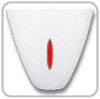 Single-Fin
The most popular setup on modern longboards, although some surfers like to have a thruster-type fin setup with two smaller fins on the outside.
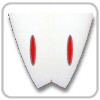 Twin-Fin
Fish surfboards often have twin fins which keep board symmetry with the fish / swallow tail shapes. This is a popular fin setup on retro surfboards.
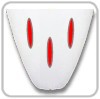 Tri-Fin / Thruster
The thruster setup is the most commonly found setup for modern shortboards and funboards / mini-mals.
Those are the main setups, but there is no reason why you can't experiment with a setup you like. Many of the more experimental surfboards will have more than three fins. If you see a board with four or more fins, you'll always see symmetry in the placement. Picture the stringer as a mirror, and you'll see one side reflected on the other.
Adjustable wing twin fin http://youtu.be/O1iPaFfqE4c See it one a surfboard here http://youtu.be/J2o0eOQEPQg
Adjustable wing twin fin
New link see it here http://www.wavefin.com/
Thank You
WaveFin
How about the quad fins?
Try explaining with measurements
Missed out quad/five fin setup